How to Transfer a Drawing to Canvas or Panel, and When Not To
Charcoal on the back, a few pieces of tape, and a trace that is a second pass at the drawing, not a copy. How I transfer a drawing to a panel, and when I skip it.
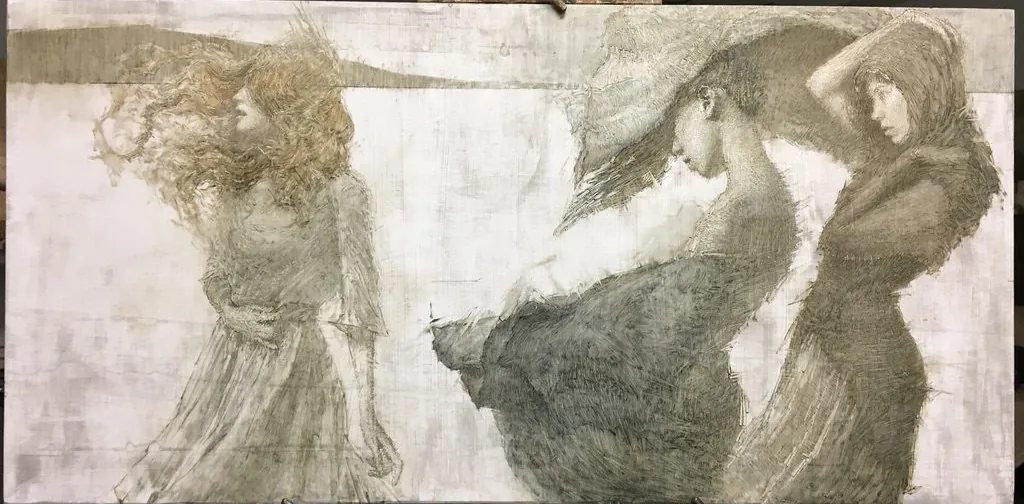
I don't always transfer a drawing. A lot of my paintings never get one. When I do, the mechanics are simple. I make the drawing on newsprint at the exact size of the panel, rub charcoal on the back where the lines are, tape it over the panel so it cannot shift, and go over the lines with a pencil. The charcoal does the job of transfer paper, and it stays erasable. What makes it worth doing is how you go over the lines. The transfer is not a copy. It is one more pass at the drawing.
When I transfer, and when I don't
I do it when a figure is put together from several references. The painting I transfer in the course comes from several photographs of one model. When I weave references together like that, a head from one, a face from another, the body from a third, I want all of it working as one drawing before any of it becomes paint. The drawing is where I decide which part comes from which photograph, and what to change on purpose. In that one, for instance, I lengthened the legs a little.
If the reference were already right, I probably wouldn't bother. A detailed drawing transferred over is a traditional way to work. It is tried and true, and there is nothing wrong with it. My problem is that I get protective. Spend long enough on a drawing and you slow your brush down to keep it safe, and being careful at the start of a block-in brings out the worst in me.
Draw it at the exact size of the panel
I trace the panel onto a piece of newsprint, so the drawing is at its final size from the first mark. It is not meant to be a pretty, fully articulated drawing. It is there to place things: the layout, the general drawing of the figure, and loosely where everything else goes. The details come later, in paint.
Size and location come first. Otherwise you spend an afternoon drawing a face and then realize you have to move it. With a figure on a horse, what matters at this point is relative scale, the size of her against the horse, the size of the horse's head against its leg.
A grid only holds size and location
My reference has a grid ruled every inch, but I don't draw the whole grid on the newsprint. I measure with a ruler to the few points I need. A full grid works too, and for a transfer it might even be easier. I wing it because I don't want to be too literal. I only need to know roughly where things are, so the composition stays consistent. Enlarging a small study onto a much bigger canvas is a different job, and the full grid for that is in how to plan a large painting.
Charcoal on the back, only where the lines are
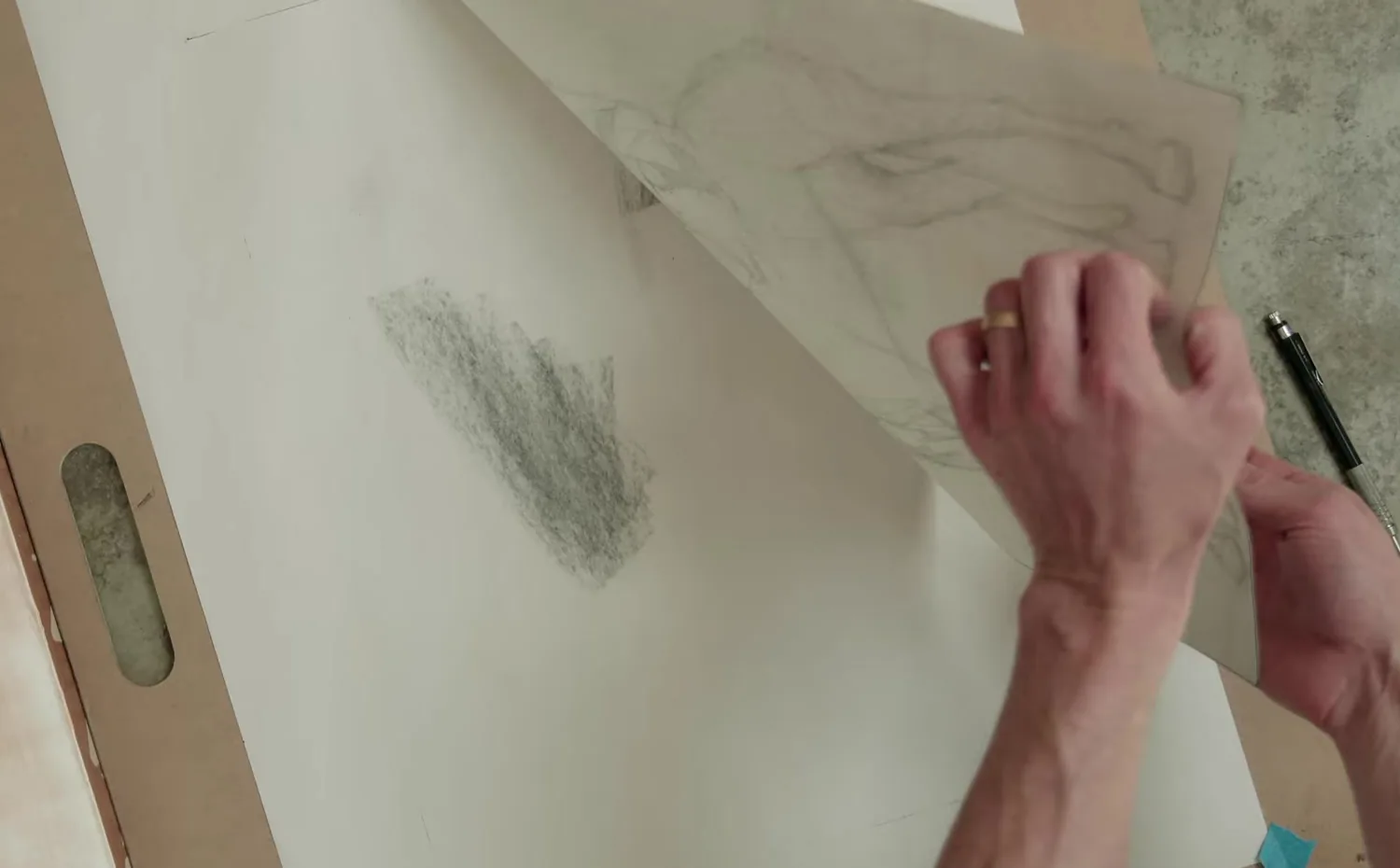
Once the drawing works, I cut it to the size of the panel, flip it and rub compressed charcoal on the back, with a sheet of paper underneath. Powdered charcoal or graphite works well too and is even easier, but it gets all over the place. You don't need to cover the whole back, only where the lines are, which honestly ends up being most of it.
Tape it down, then peel a corner
First I check that the panel is the way I planned it, which edge is the top and where the dark part turns into the sky. Then the drawing goes over the front with several pieces of tape. Even a subtle shift is bad, because if the paper moves, the lines move with it.
Go through a few marks, pop a corner off and look. That is why it is taped this way: the sheet comes up and goes back down in the same place. I've done transfers where none of it came through, which is annoying, so check early. Your hand will smudge the panel too. A mahl stick helps, or just keep off the areas you need and lift the rest later.
The transfer is a second drawing
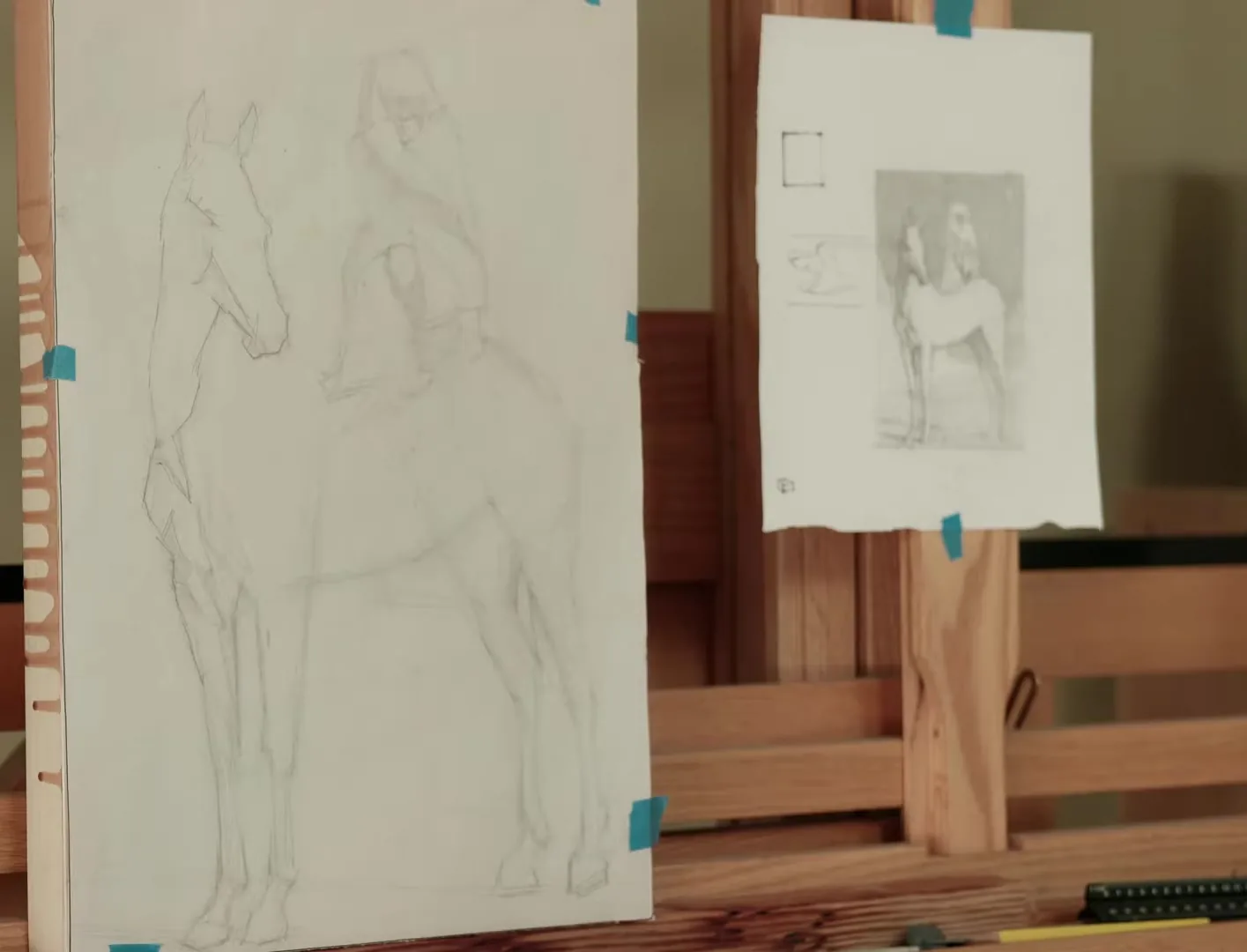
This is the part that matters. I'm not tracing what is underneath. I'm drawing it again. The proportions should be settled by now, so what I work on is the contour, trying to add interest instead of making a dry, awkward copy. Where a line doesn't work, I connect it into another one. I simplify on purpose and pick up the pace instead of getting precious. I like broken contour, so some lines stay open where I don't want a hard edge, like where the shadow of her fabric meets the dark sky. If I forget a line, that's fine. What has to come across is where the major parts sit in relation to each other.
Copying something I've already done almost always comes out worse, even when I'm only enlarging a small painting of my own. A straight copy is derivative. If I try to make it better and put in what I didn't get the first time, it ends up more interesting. By the end of the transfer this is my third pass at the drawing, and I haven't started painting. A failure in the drawing is much cheaper than one in the painting, so this is where I make the curious decision instead of the fearful one, and undo it if it turns out wrong.
Lift it, and keep the drawing beside you
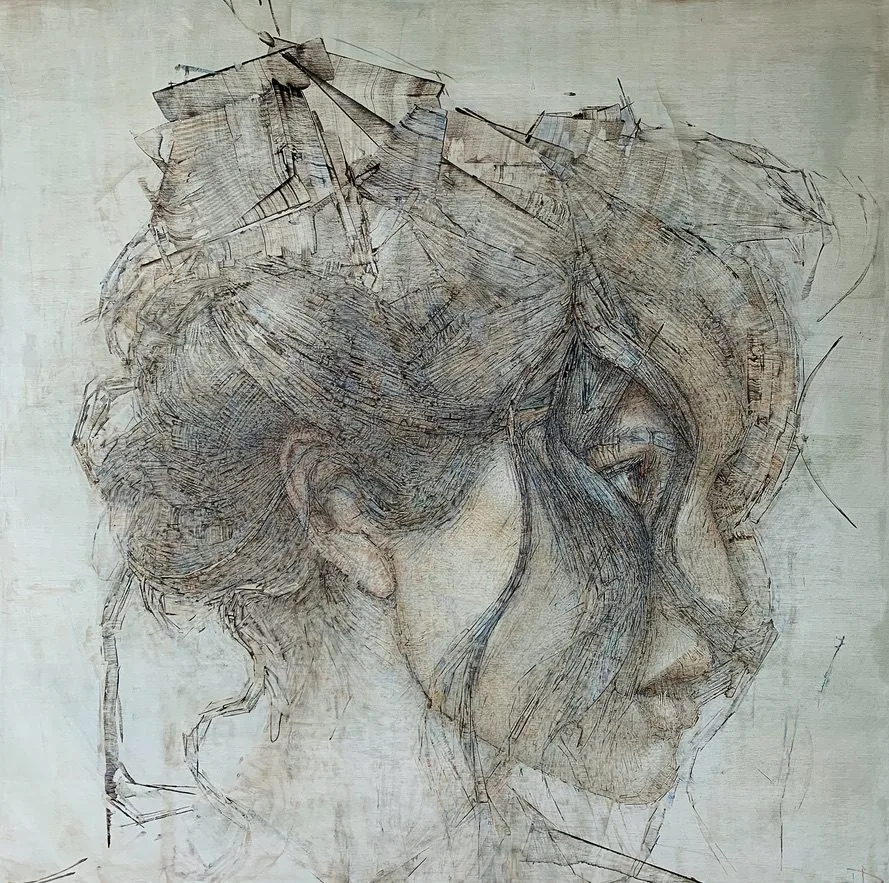
Before taking the sheet all the way off, I peel back the sides to see the whole thing while the tape still holds it. You will miss a few things. I leave most of them, because I don't want it too precious.
The transfer holds less than the drawing did, so the drawing goes up beside the panel and I paint with both in view. Then a kneaded eraser lifts the places my hand rested and the random marks that came through. That way the panel isn't confusing to look at, and loose charcoal doesn't muddy the paint when you mix. How easily it lifts also tells you how easily you could erase a line you meant to keep, so watch your hand.
Why charcoal and not transfer paper
I pick the material by how much I still want to change afterward. I move paint around, and a completely permanent drawing bothers me. With charcoal, if I decide to leave out a line, I erase it. Transfer paper and oil have real advantages: they don't move or smudge, and you can't erase them by accident. If the preliminary is exactly what you want and opaque paint is going over it, red transfer paper, which I find really permanent, or the old oil-paint transfer is the better tool.
Set the panel up for the first day
In the course painting, the panel is dark where the sky goes and keyed lighter elsewhere on purpose. The theme is her and the horse against a dark sky, so the contrast is already there before the first stroke.
From there, the lines are where the painting starts, not something to protect. On the first day of paint I might put one brush stroke over most of a face and lose some of the drawing, because that's how I like to paint. The alternative is a little brush filling in tiny shadow shapes, which makes me work in a way I don't like. So I set up the start to hand me the problems that bring out my best, and that is a big part of building a process that is yours. That first day, in two colors, is the next stage: grisaille and underpainting.
Examples
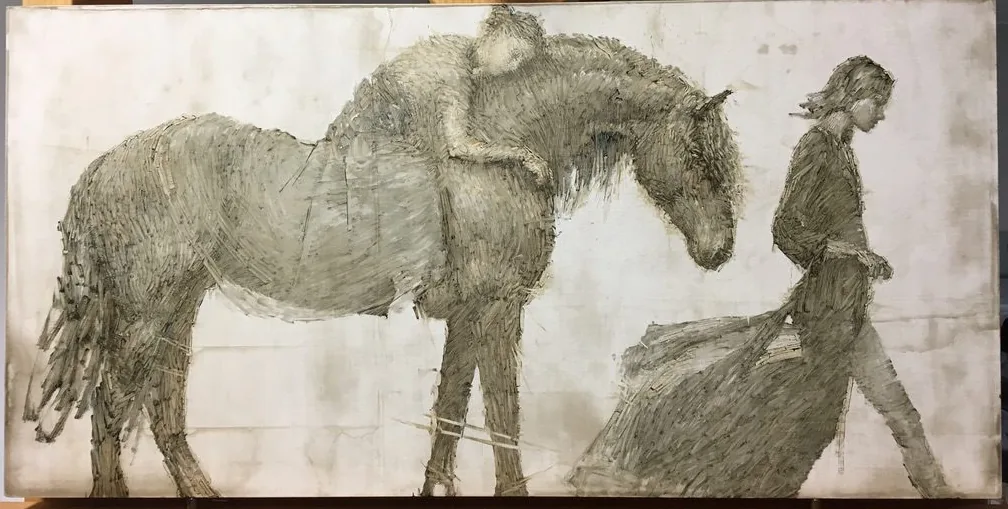
A transfer is one way to get a drawing onto the surface. These two painters settled it on the canvas instead.
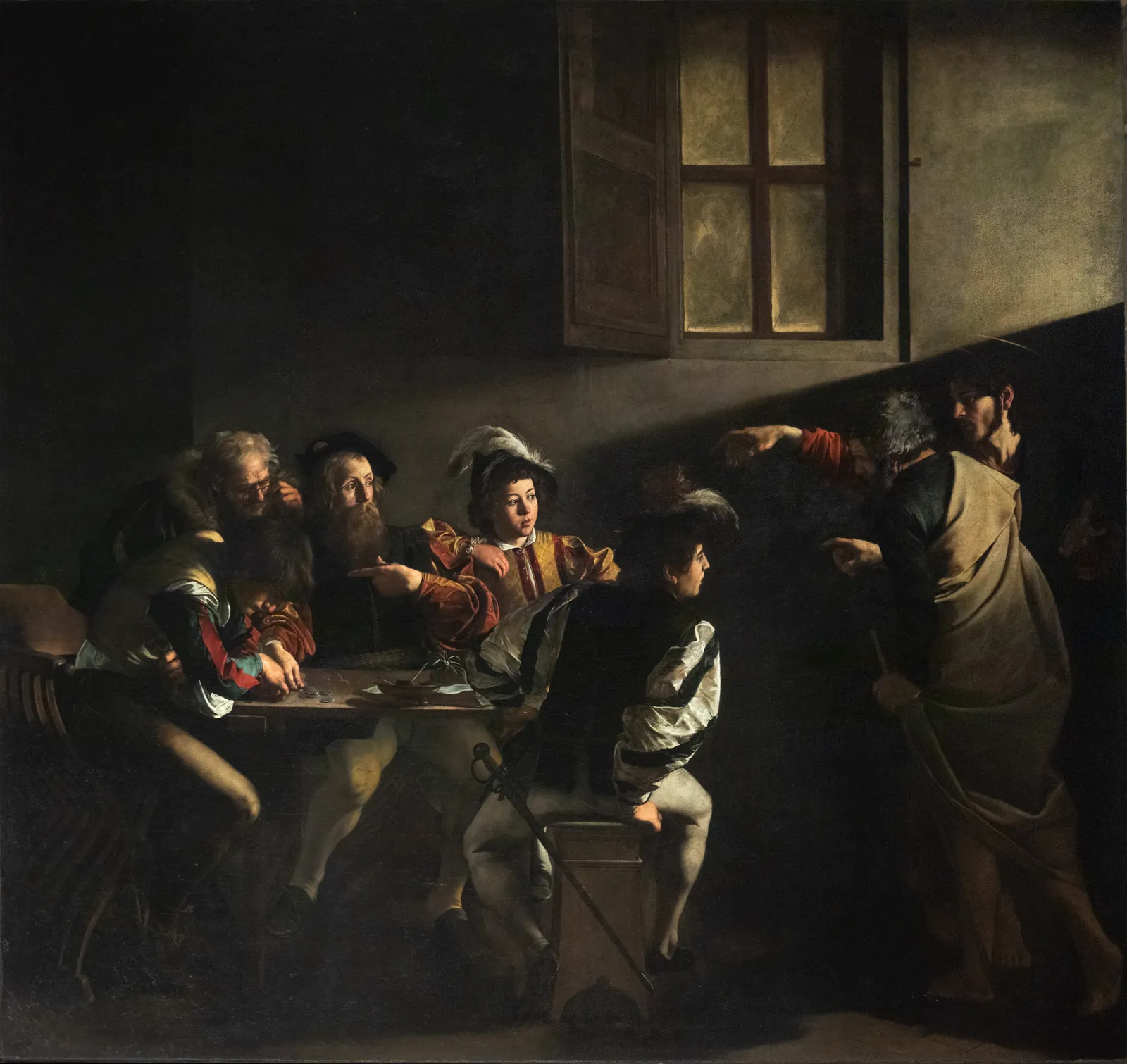
Caravaggio scratched the points into the ground
No drawing on paper can be securely attributed to Caravaggio. With the model in front of him, he scratched the key points of the composition freehand into the priming while it was still soft, with the end of a brush handle or a stylus. Larry Keith's technical study for the National Gallery in London (1998) describes the incisions as little more than marks for where the main elements go, and the finished pictures often depart from them. They also let a model find the same pose at the next sitting. Giulio Mancini, writing in Rome around 1620, noted the limit of painting from the model. It works for a single figure and not for a big story, since you can't fill a room with people and have one of them laugh or cry or walk while he holds still to be copied. Keith reads the incisions as how Caravaggio got around that.
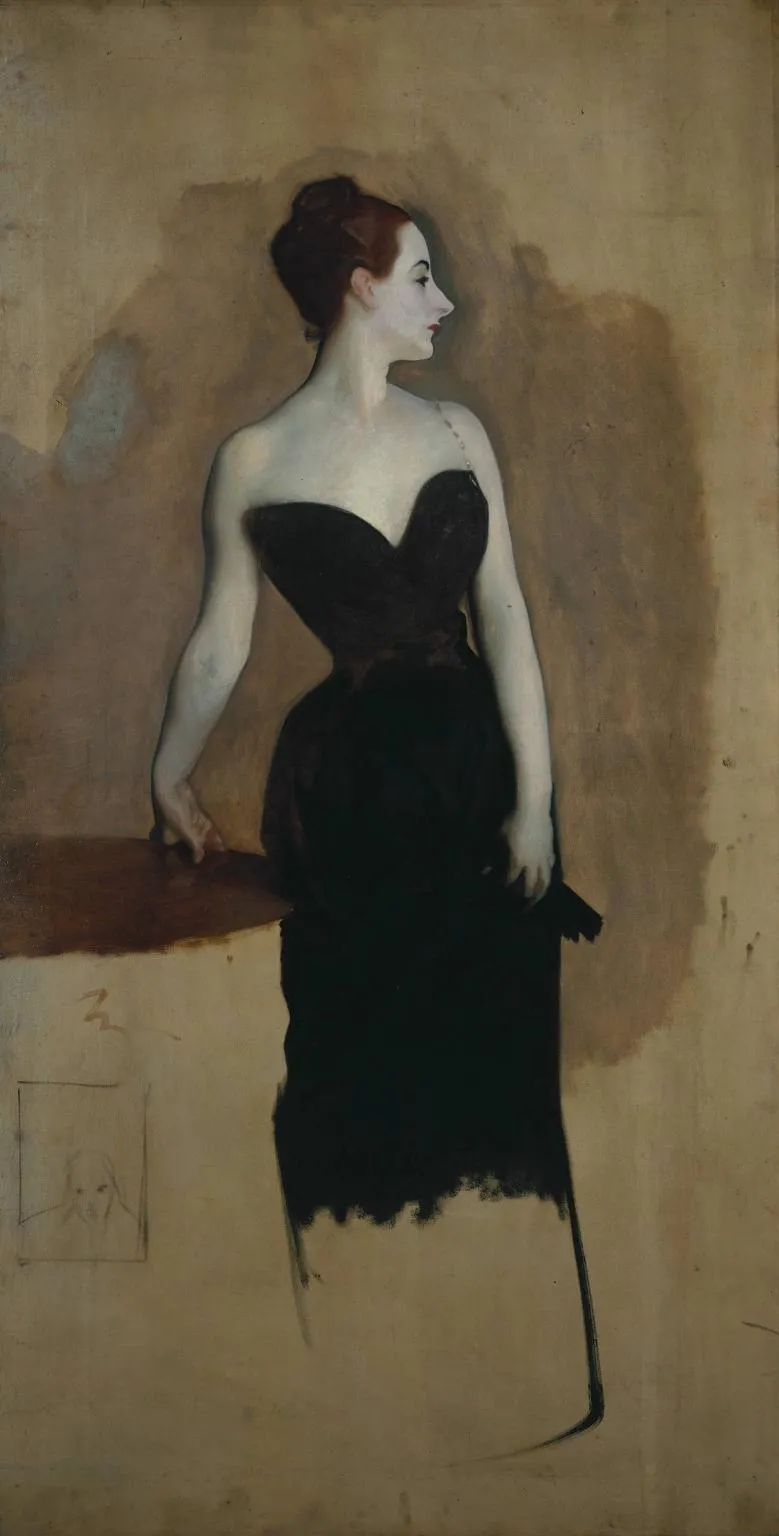
Sargent placed the head, then drew with the brush
Sargent's drawing on the canvas was a few lines. Julie Heyneman, who studied with him, described how he began a portrait, in an account Evan Charteris printed in his 1927 biography. He placed the head with a few careful lines of charcoal, passed a rag over them, and began to paint once they showed only faintly. The first outline he looked for in paint was where the light meets the shadow on the face, not the edge of the head against the background. "You must draw with your brush," he said.
Both work when the drawing can be found on the canvas itself, with the model in the room. I transfer when it can't, when the figure comes from several references and has to become one drawing first.
Start tomorrow
Make a drawing on newsprint at the exact size of a small panel, and settle size and location before any detail. Rub charcoal on the back where the lines are, tape the sheet down, trace a few lines and peel a corner to check. Then do the rest as if you were drawing it again. When you lift the paper, find one contour on the panel that came out better than the one on the sheet.
FAQ
How do you transfer a drawing to canvas without transfer paper? Rub charcoal or graphite on the back of the drawing where the lines are, tape it over the canvas or panel so it cannot shift, and go over the lines with a pencil. Peel a corner to check, then lift the sheet and clean off the loose charcoal with a kneaded eraser.
Will the charcoal muddy my oil paint? It can, if it is left loose. Go over the panel with a kneaded eraser before you paint, so the charcoal does not end up in your mixtures.
Do I need to transfer every painting? No. Most of mine get no transfer. I do one when a figure comes from several references and has to be settled as one drawing first.
Letters from the studio
An occasional letter, usually a story about how some painter actually worked and what I am painting now. The day after you sign up, a welcome code for the course.
Written by Daniel Bilmes — painter and educator, Los Angeles. Methods.art is the online painting program built around developing your own process, not copying a house style. See the program or work with Daniel one-on-one.